

Resources
Insights
To mitigate money laundering and corruption risks, financial institutions must apply rigorous Politically Exposed Person (PEP) screening processes. This article outlines essential best practices for identifying high-risk customers, overcoming data and regulatory challenges, and implementing effective technologies to ensure compliance with global AML frameworks.
False positives in Anti-Money Laundering (AML) not only waste compliance resources — they also risk damaging customer relationships and delaying genuine alerts. This guide explores the root causes of AML false positives and offers practical, AI-driven strategies to reduce them while enhancing efficiency and customer trust.
By 2025, the compliance landscape will be fundamentally reshaped. From AI-driven surveillance and federated learning to stricter crypto regulations and ESG integration, this article explores the transformative trends shaping financial compliance. Learn how institutions can stay ahead of regulatory complexity while improving detection, protecting data privacy, and streamlining operations.
Ongoing monitoring is a critical pillar of any AML compliance framework. This article explores the core benefits of continuous surveillance, from real-time detection of suspicious activity to enhanced risk assessment and regulatory alignment. Learn how automation, risk profiling, and regular data updates can transform your compliance strategy and protect your institution from evolving financial crime threats.

Learn how to detect and prevent insider trading by identifying key red flags—like unusual trading volumes and suspicious timing—before they escalate into market abuse. This guide explains how AI-driven monitoring, corporate governance, and real-time surveillance help maintain market integrity.
Accurate customer risk profiling is essential for modern financial compliance. This expert guide explores key techniques like CDD, EDD, and AI-driven automation to help institutions identify high-risk customers, meet regulatory requirements, and proactively manage financial crime risk.
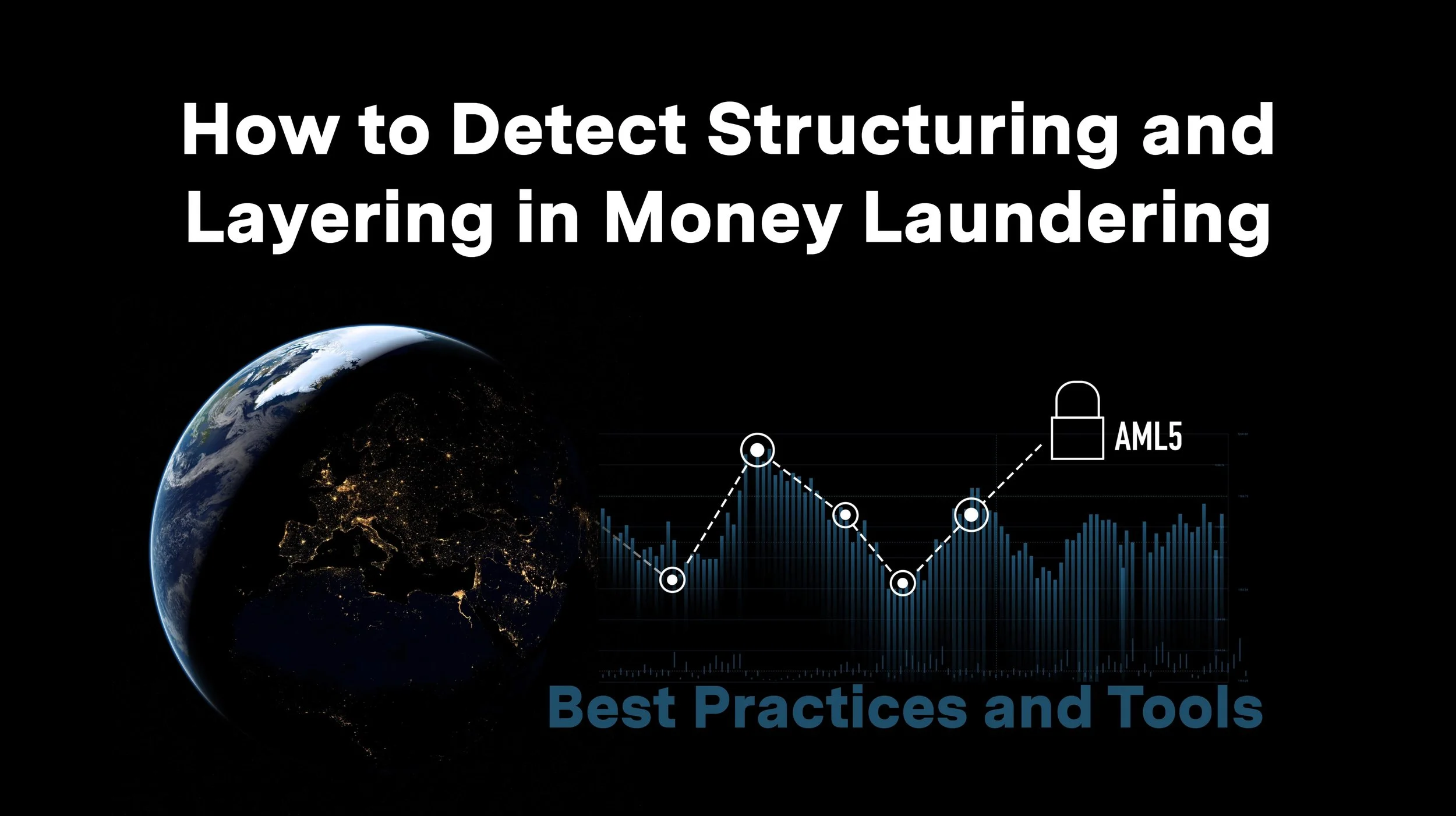
Structuring and layering are core techniques in the money laundering cycle — and among the most difficult to detect. This guide explores how modern compliance teams can spot these behaviours using red flag indicators, real-time monitoring, and AI-driven analytics.
Discover what modern name screening solutions should deliver in 2025 — from AI-powered detection to real-time risk monitoring. Learn how to enhance compliance, reduce false positives, and stay ahead of evolving financial crime threats.

Understanding the difference between Customer Due Diligence (CDD) and Enhanced Due Diligence (EDD) is critical for any compliance programme. This guide breaks down the core components of CDD and EDD, their regulatory foundations, and how they help financial institutions identify risk, meet AML obligations, and prevent financial crime through continuous monitoring, identity verification, and robust risk profiling.
Adverse media screening plays a critical role in modern risk management by uncovering reputational threats, identifying financial crime indicators, and ensuring regulatory compliance. This article explores how financial institutions can leverage AI, machine learning, and continuous monitoring to transform unstructured media into actionable intelligence.

KYC automation is transforming compliance in 2025. By streamlining identity verification with AI, OCR, and real-time screening, businesses are accelerating onboarding, reducing costs, and ensuring regulatory compliance — all while enhancing customer experience and operational efficiency.

AI is transforming how financial institutions combat fraud, money laundering, and compliance fatigue. This article explores how machine learning, predictive analytics, and behavioural modelling are redefining risk management—enabling real-time detection, reducing false positives, and streamlining regulatory workflows.
Enhanced Due Diligence (EDD) is essential when standard checks fall short. This article explores how financial institutions can identify high-risk customers, implement EDD best practices, and leverage advanced technologies like AI, machine learning, and real-time monitoring to stay compliant and proactive in preventing financial crime.

AML risk scoring is the foundation of a smart compliance framework. This expert guide breaks down how to build dynamic risk models, assess key risk factors, and leverage AI to detect financial crime faster and more accurately.

Behavioural analytics is reshaping fraud detection by analysing user behaviour in real-time to detect emerging threats. This article explores how AI, machine learning, and behavioural biometrics work together to reduce false positives, identify anomalies, and proactively prevent financial crime.

Real-time transaction monitoring empowers financial institutions to detect suspicious activity the moment it occurs. This article explores how AI, machine learning, and behavioural analytics enhance detection accuracy, reduce false positives, and help firms stay compliant with evolving AML regulations.

Sanctions screening is essential in 2025 for mitigating financial crime risks and meeting global regulatory obligations. This guide explains how organisations can strengthen compliance by understanding evolving sanctions requirements, managing false positives, and implementing advanced screening technologies.
Discover how to build an effective Know Your Customer (KYC) checklist that meets compliance requirements, mitigates risk, and enhances onboarding with the help of automation and best practices.
Simplified Due Diligence (SDD) helps financial institutions verify low-risk customers faster by applying proportionate, risk-based checks. This guide explores when SDD is appropriate, how to implement it effectively, and the role of automation in ensuring compliance without unnecessary friction.

In today’s digital-first economy, verifying customer identities swiftly and securely is essential for compliance, fraud prevention, and customer trust. Know Your Customer (KYC) APIs offer a powerful solution by automating identity verification processes, reducing manual tasks, and ensuring real-time compliance with global regulations. This guide explores how KYC APIs work, the different types available, key benefits, and what to consider when choosing the right API for your business.
Ongoing monitoring is a critical element of AML compliance, helping financial institutions detect and manage money laundering risks in real time. This article explores the key components, best practices, and technologies that support effective ongoing monitoring—while highlighting the consequences of non-compliance and the benefits of a risk-based approach.

Financial crime costs trillions globally and threatens institutional integrity. This guide breaks down major threats like fraud and money laundering, and outlines key compliance measures, risk management tactics, and the role of AI and collaboration in defending against evolving financial crime risks.

LLMs are reshaping the future of compliance. From automating document review to streamlining regulatory tracking, discover how these AI tools help compliance teams cut costs, improve accuracy, and stay agile in a fast-changing regulatory environment.

Large Language Models (LLMs) are transforming compliance by making sense of the unstructured data that overwhelms traditional systems. This article explores how LLMs enable faster, smarter risk detection—automating document review, enhancing name and media screening, and supporting regulatory interpretation. As AI capabilities evolve, LLMs offer compliance teams a powerful tool to boost efficiency while maintaining oversight and integrity in high-stakes environments.

Natural Language Processing (NLP) is revolutionising onboarding by revealing hidden risks buried in unstructured data sources like news, social media, and open records. This article explores how NLP empowers compliance teams to move beyond surface-level checks—enhancing identity verification, detecting adverse media, and strengthening due diligence. As regulatory demands grow and fraud tactics evolve, NLP offers a proactive, intelligent layer of defence from the very first customer interaction.

In today’s volatile compliance landscape, static risk assessments fall short. Real-time profiling and personalised scoring enable organisations to evaluate customer risk as it evolves — leveraging behavioural data, transaction monitoring, and AI to identify threats before they escalate. This article unpacks how dynamic scoring frameworks empower smarter decisions, improve compliance, and protect organisational integrity in real time.

In an era of heightened regulatory scrutiny and sophisticated financial crime, businesses can no longer afford to view customer screening and due diligence as mere compliance checkboxes. These processes are now strategic imperatives—critical tools for managing risk, protecting reputation, and driving sustainable growth. This article explores how organisations can build a compelling business case for customer due diligence, combining both qualitative and quantitative approaches to identify high-risk clients, ensure regulatory alignment, and uncover actionable insights into customer behaviour. With the right investment in technology and methodology, due diligence transforms from a regulatory burden into a competitive advantage.

Enhanced Due Diligence (EDD) plays a pivotal role in sanctions compliance, but knowing when it becomes mandatory versus when it's an optional safeguard can make the difference between regulatory resilience and reputational risk. This article demystifies the regulatory triggers—such as PEPs, high-risk jurisdictions, and complex ownership structures—and outlines how financial institutions can strategically combine EDD with sanction screening for more effective risk mitigation. Drawing on best practices, legal obligations, and real-world case studies, it offers actionable guidance for compliance professionals navigating today’s complex financial crime landscape.
Explore how ongoing monitoring fortifies compliance and risk management. Understand its role in AML and KYC, key components, and the impact of technology on proactive risk detection.
Explore the crucial role of sanctions screening in compliance. Discover best practices to protect your business and ensure regulatory adherence.
Documents
Select Category





Watch

DetectX® A comprehensive solution for Real-Time Fraud Detection, Anti-Money Laundering and Enhanced Customer Due Diligence.
DetectX® A comprehensive solution for Real-Time Fraud Detection, Anti-Money Laundering and Enhanced Customer Due Diligence.
Find out more:

DetectX® – a powerful machine intelligence-based predictive analytics platform.
DetectX® is a powerful machine intelligence-based predictive analytics platform that serves as the foundation for Prospero's business solutions.
DetectX® delivers exceptional accuracy and speed with its optimised search, match, detect, and score system. Built on pattern recognition, it generates actionable insights to address risks and opportunities effectively. Unlike generic AI, DetectX® uses a tailored, evolving approach to refine algorithms, ensuring adaptable, high-quality results across industries.
Find out more about DetectX®

Elevate Name Screening and achieve a 360° view of your Customer with DetectX® Name Screening.
DetectX® - Elevate your Name Screening
Name Screening excellence for the Financial Services Industry. Elevate Name Screening and achieve a 360° view of your Customer with DetectX®. Comprehensive name screening is a sophisticated and complicated process. DetectX® Name Screening simplifies and streamlines this process with the use of sophisticated AI principles and task automation.
Find out more about DetectX® Name Screening
Book Demonstration
Reviews
More than 60 clients in 12 countries across the financial, life science, manufacturing, commercial and energy industries stream-line their business with Prospero solutions. Read a sample of testimonials from our customers.
-
Banking
- 8 Jan 2023 FI Finanz Informatik
- 7 Jan 2023 finnova AG Bankware
- 6 Jan 2023 PLUSCARD
- 5 Jan 2023 Risk Solution Network
- 4 Jan 2023 Sparkasse Zollernalb
- Insurance
-
Life Sciences
- 1 Jan 2023 LKH Feldkirch
Stories

Generali Switzerland is one of the country’s leading insurers — read the case study to see how they enhanced compliance with DetectX® through advanced name screening and real-time transaction filtering.

Finnova, a leading provider of banking software in Switzerland, integrated DetectX® to enhance their predictive analytics capabilities. This collaboration resulted in the development of the Finnova Analytical Framework (FAF), enabling banks to optimise business processes through advanced machine learning models.

Helvetia is the leading Swiss utility insurer, read case study of how they implemented and benefited from DetectX® solutions.

Sparkasse Zollernalb, a German savings bank, implemented DetectX® to optimise their sales processes. By leveraging DetectX®'s predictive analytics, they achieved a significantly higher contribution margin in their card business, demonstrating the platform's effectiveness in enhancing sales performance.
DetectX® delivers continuous, automated third-party due diligence by unifying global data, reducing false positives and providing real-time risk insights across your entire supply chain.
As regulations expand accountability, DetectX® gives organisations a single, intelligent view of supplier and partner risk. With advanced entity matching, adverse media analysis and seamless system integration, it ensures accurate, always-up-to-date compliance oversight.